

References
Project paths, applications, and optimization — technically framed and without interchangeable standard solutions.
[ REFERENCES IN CONTEXT ]
Experience shows in the controlled end-to-end process
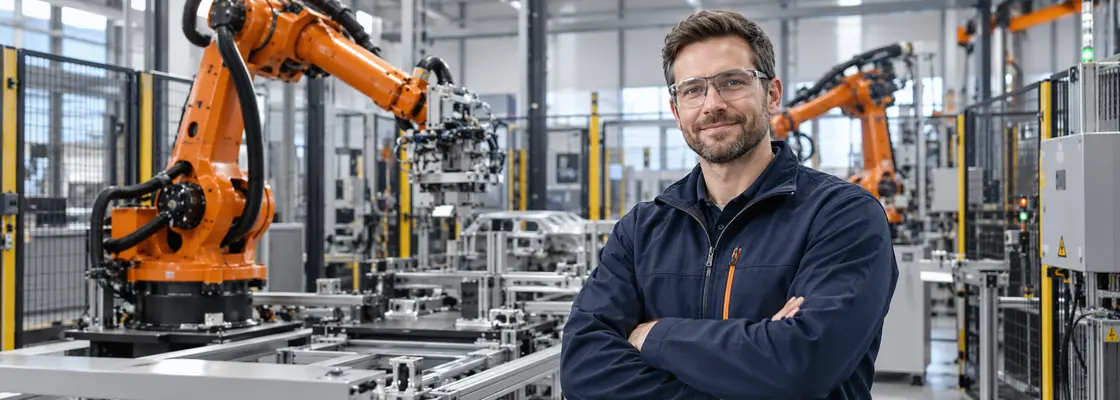
References are helpful when they show more than just a robot behind a safety fence. What matters are the task, component, process environment, interfaces, and the result that needs to be achieved in day-to-day production.
That’s why the reference section separates three perspectives: the path through a project, concrete applications across different industries, and the optimization of existing plants and processes.
[ THREE VIEWING ANGLES ]
From project path to measurable improvement
Choose the entry point that is closest to your current task setup.
01
Projects
Capture requirements, engineering, integration, commissioning, acceptance, and production start-up.
02
Application Examples
Real tasks from different industries, with suitable robot types and processes.
03
Process optimization
Analyze existing facilities, separate causes, and improve them in a targeted, technical way.
[ PROJECT PATH ]
From the first task to stable production start-up
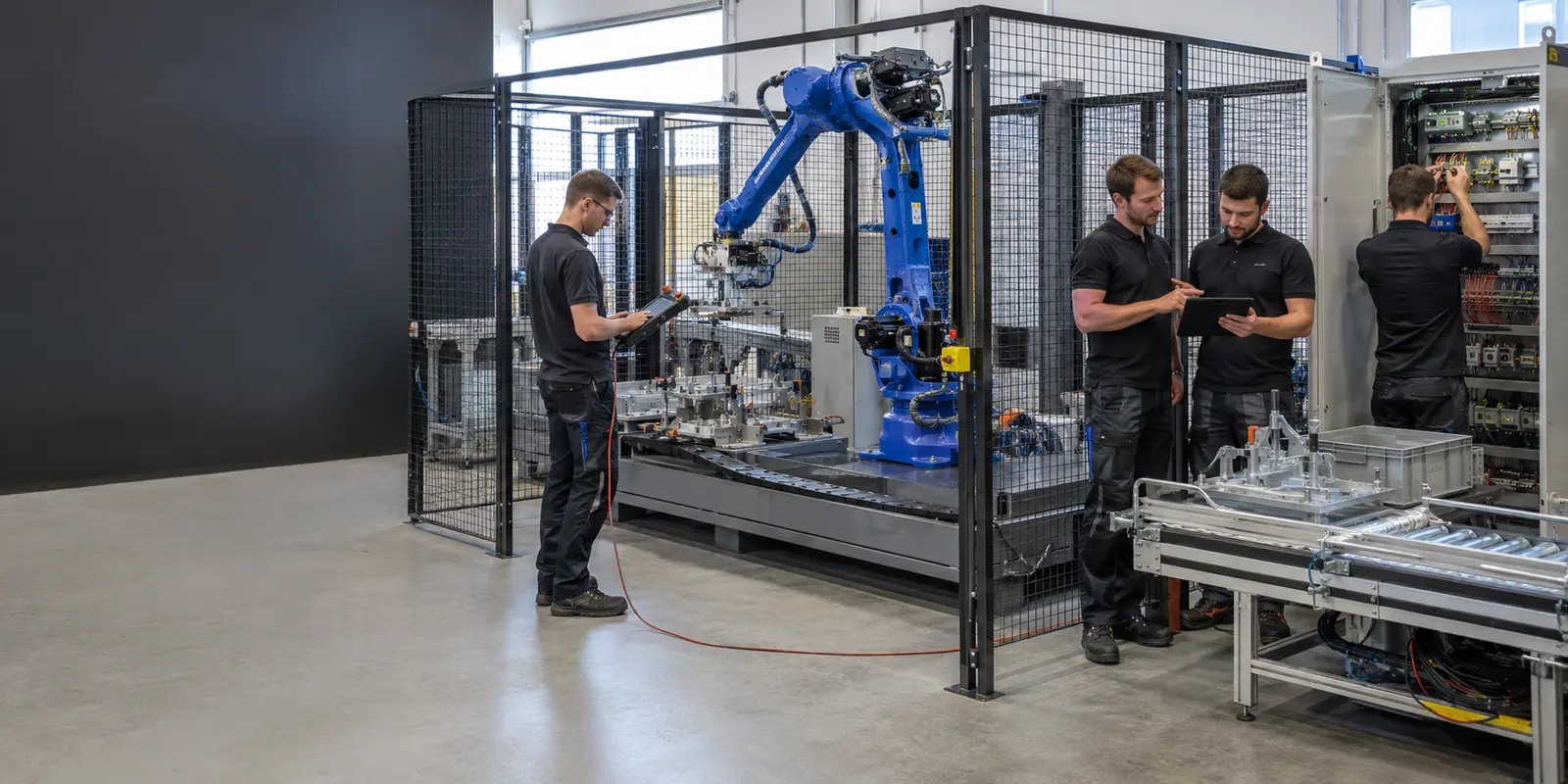
A robust automation project doesn’t come from choosing a robot alone. Process capture, feasibility, design, programming, safety, and integration must be aligned with each other.
The project page shows which decisions are made in which phase and how technical results are verifiably secured.
- Process capture and definition of objectives
- Concept, simulation, and engineering
- Setup, Testing, and Commissioning
- Acceptance Testing and Production Support
[ APPLICATION EXAMPLES ]
Different industries require different robotics
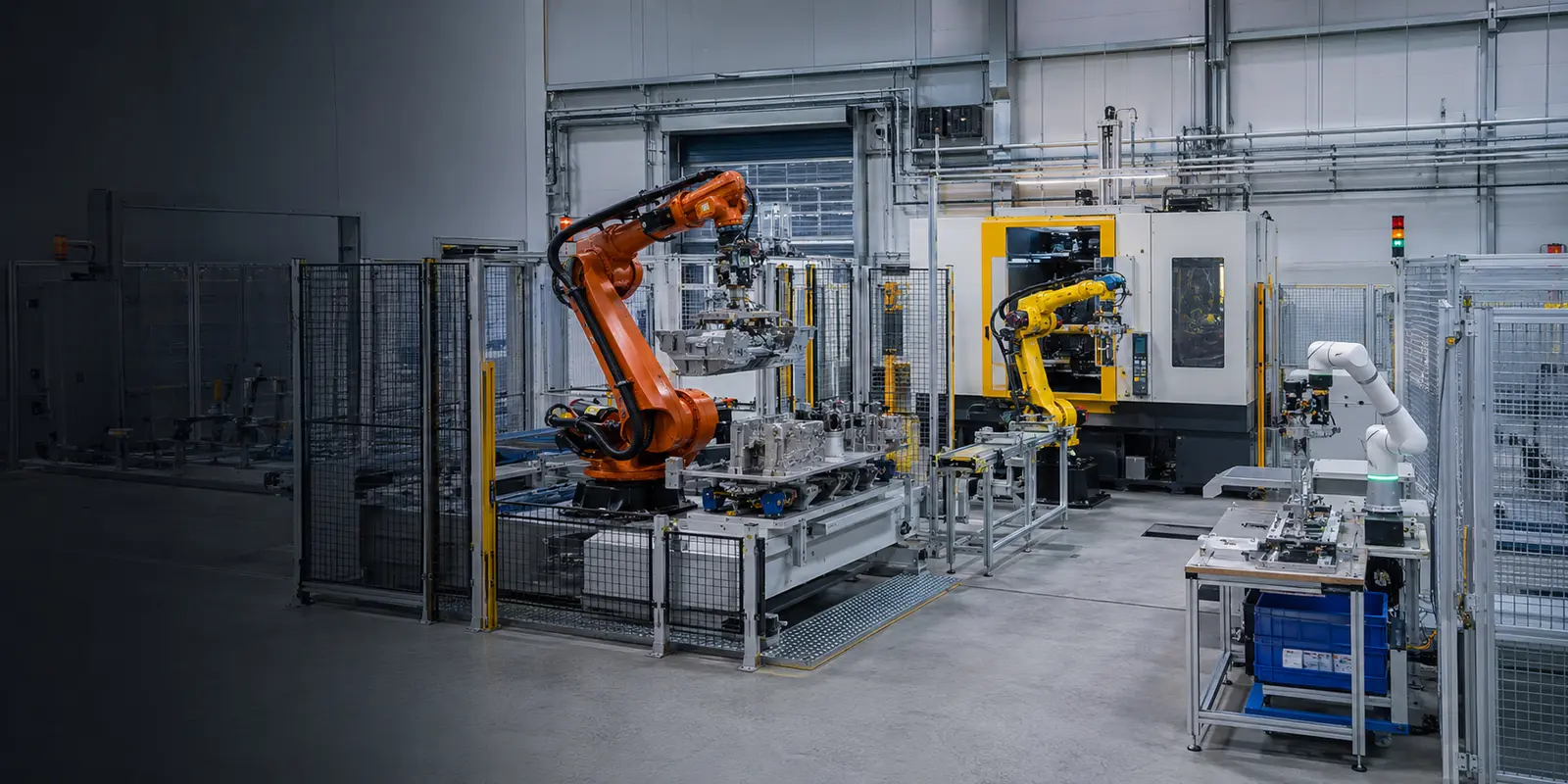
Components, hygiene, cycle time, reach, payload, and process risk determine which robot, gripper, and system setup make sense.
The examples range from automotive and metalworking to food and plastics, as well as medical technology, logistics, electronics, and woodworking.
- Different robot types and manufacturer-specific colors
- Industry-standard production environments
- Suitable grippers, tools, and sensor technology
- Technically plausible tasks instead of symbolic images
[ BEFORE / AFTER ]
Improve existing processes in a targeted way instead of replacing them too quickly
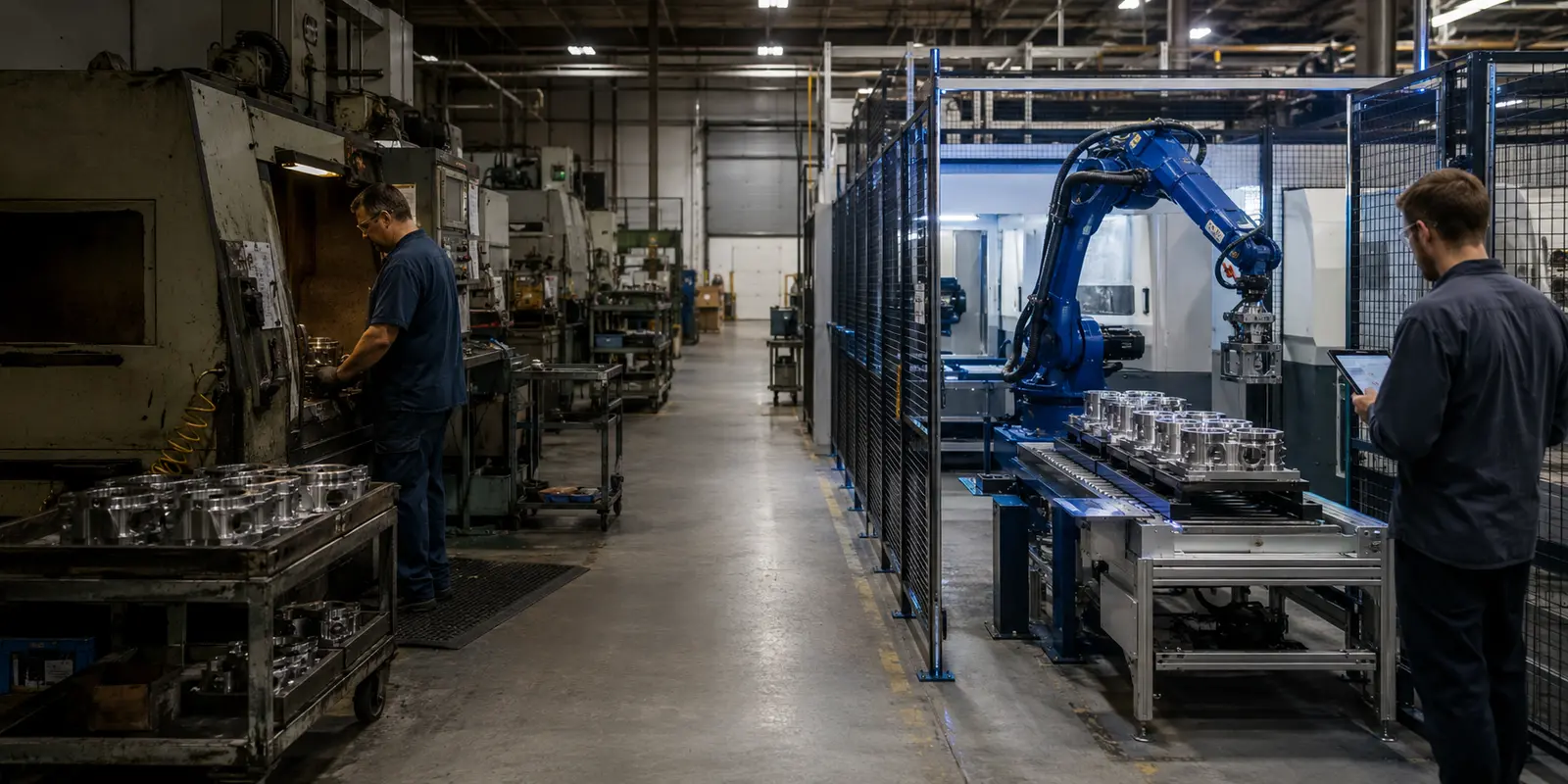
Not every weakness requires a new system. Often, the most effective levers are in the gripper, fixture, robot path, sensor technology, software, or material supply.
That’s why process optimization starts with a clear separation of symptoms, causes, and a sensible course of action.
- Cycle-time and fault analysis
- Gripper and fixture optimization
- Software, sensor technology, and robot paths
- Decide between retrofit or new build in a clear and reasoned way
[ THIS IS HOW YOU FIND THE RIGHT ENTRY POINT ]
From the example to your own task description
The examples provide guidance. The reliable solution is created from your real-world constraints.
01
Starting point
Describe processes, components, variants, and current bottlenecks.
02
Target picture
Define cycle time, quality, availability, and operation together.
03
Classification
Technically compare suitable project and application examples.
04
Next step
Set feasibility, an on-site appointment, or the concept phase in a sensible way.
[ WHAT EXAMPLES SHOW ]
Technical orientation
The examples make visible the robot type, task, environment, and typical integration questions.
[ WHAT REMAINS INDIVIDUAL ]
Your real system
Performance, cycle time, and cost-effectiveness only become reliable once your process data is considered.
- No invented customer names
- No blanket success figures
- No standard cell without process validation
[ YOUR TASK ]
Which example fits your process?
Describe the component, the sequence of steps, and the goal. AROBIS assigns which experiences and technical approaches can be transferred.
[ FAQ ]
Frequently asked questions about references and applications
Clear answers to classify examples and to assess how transferable they are to your project.
Customer names and sensitive production data are published only with explicit approval. That is why the examples focus on technically relevant tasks and solution principles.
No. The examples illustrate typical tasks. Grippers, fixtures, safety, software, and interfaces are designed for the real process.
Often, principles can be carried over. However, a reliable statement requires components, cycle time, variants, the environment, and the available interfaces.
A short process description, images or videos, part data, the desired cycle time, and known issues or quality requirements are helpful.
Yes. Existing systems can be analyzed, optimized, extended, or technically modernized.
AROBIS clarifies the task, requests additional data if needed, and recommends the appropriate next step.