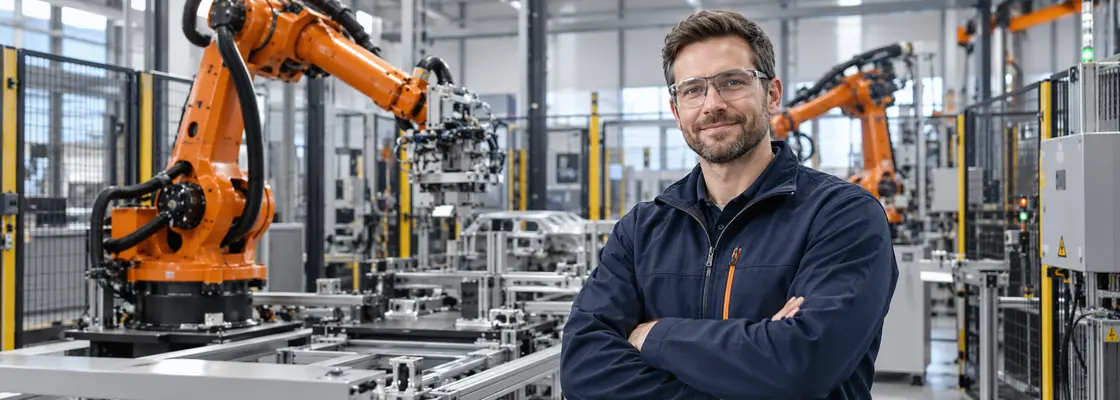


Before / After / Process Optimization
Not every problem needs a new system—what matters is the right root cause and the most effective technical lever.
[ UNDERSTAND EXISTING ASSETS ]
Improving processes starts with a clean root-cause analysis
Cycle-time losses, malfunctions, or quality issues often show up in one place, but originate somewhere else. That’s why AROBIS looks at robots, grippers, fixtures, sensing, software, operator actions, and material flow together.
The goal is not generic modernization, but a technically justified improvement with verifiable criteria.
[ BEFORE / AFTER ]
From observed symptoms to robust measures
Three levels help avoid impulsive action and prioritize improvements in a way you can track.
01
Symptom
Downtime, loss of cycle time, scrap, rework, or high operator effort.
02
Root cause
Gripper, fixture, robot path, sensing technology, software, or material flow.
03
Proof
Comparable measurement before and after implementing the measure.

[ CYCLE-TIME & FAULT ANALYSIS ]
Measure losses where they actually occur
Cycle times, waiting conditions, fault messages, and operator interventions are considered together. Individual fast robot movements help little if material or approvals slow down the overall process.
- Capture cycle time and partial times
- Check waiting conditions and interlocks
- Group fault messages by cause
- Include operator and restart times
[ PRODUCTION REALITY ]
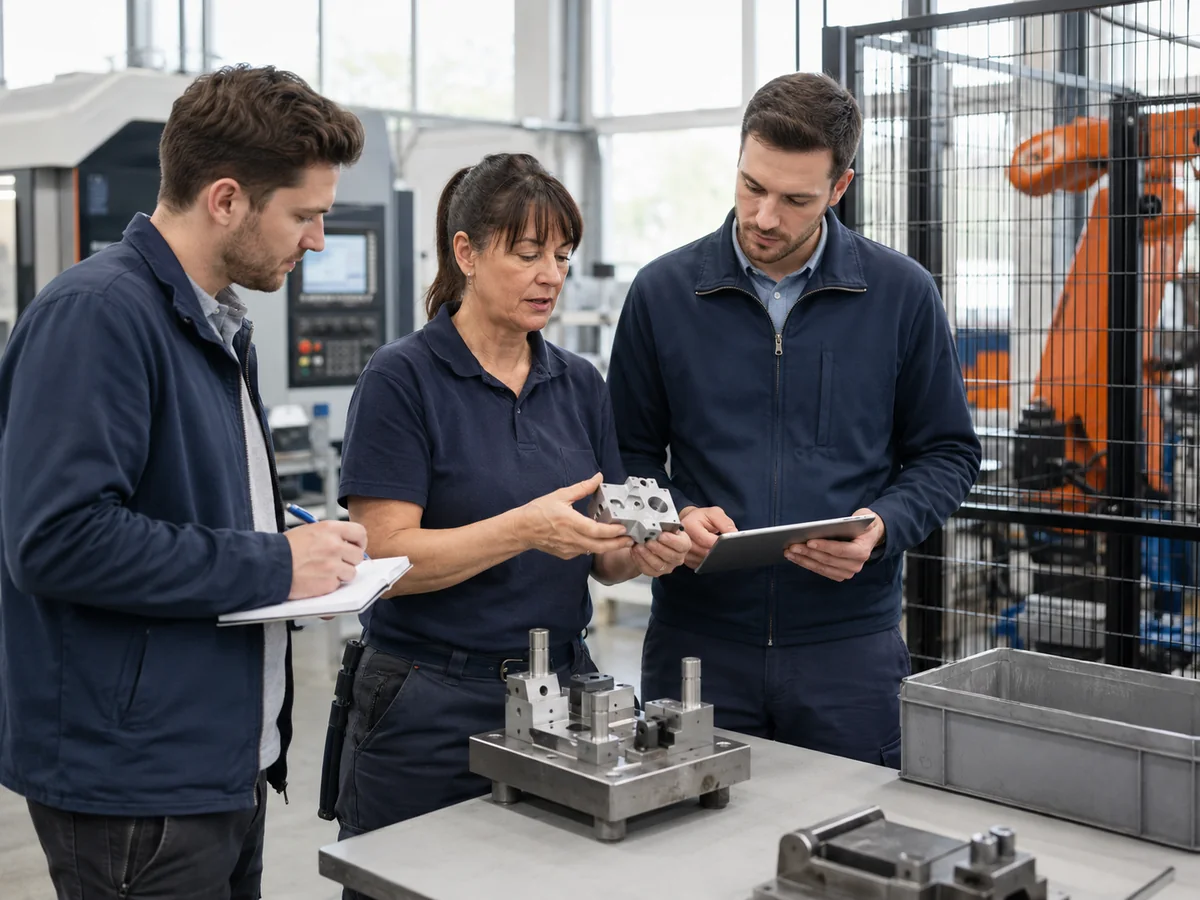
Operating knowledge belongs in the technical assessment
Employees know recurring malfunctions, unfavorable handling motions, and typical variants. These observations are linked with control data and technical validation.
- Operator sequences and interventions
- Variants and exceptional situations
- Accessibility and restart
- Match practical know-how with data
[ GRIPPERS & FIXTURES ]
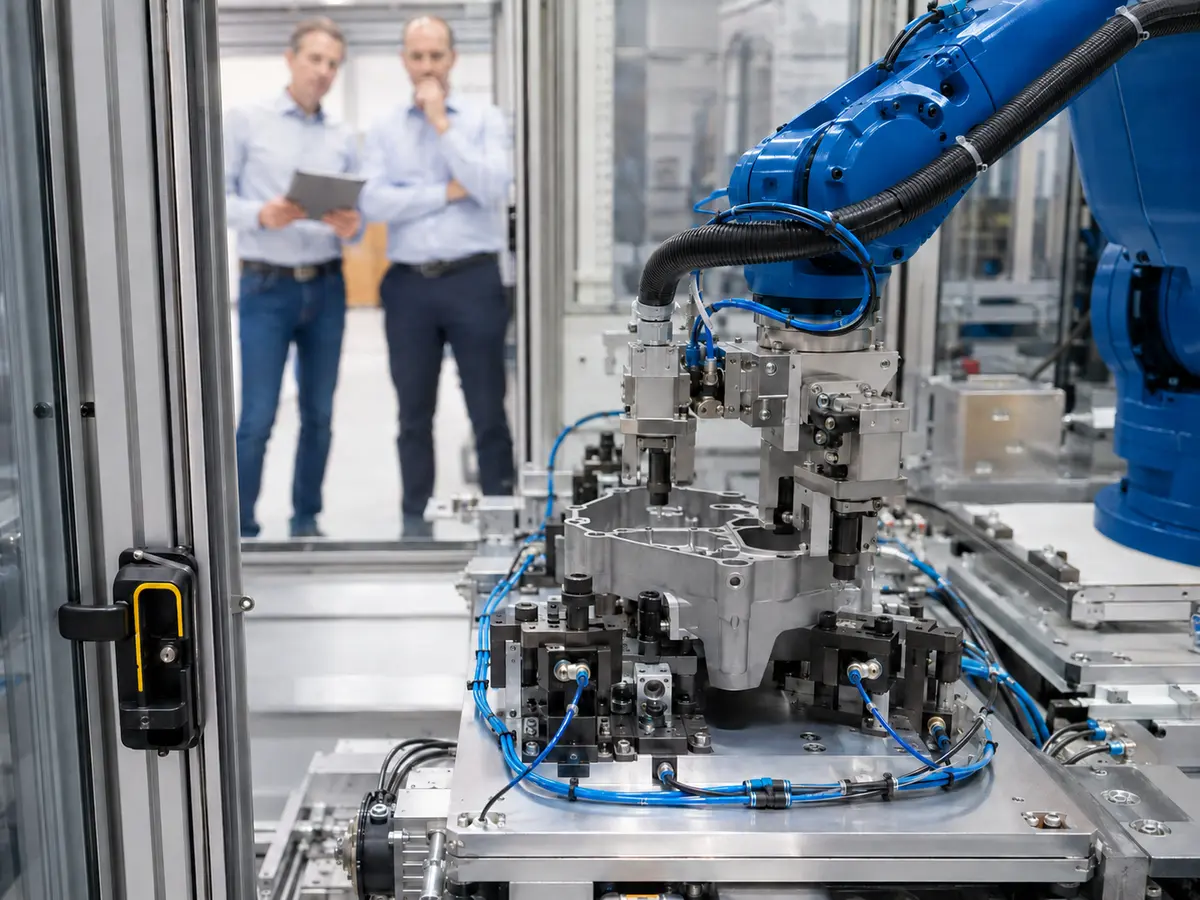
Small mechanical causes can destabilize the entire process
Unclear component positioning, wear, unfavorable tolerances, or missing queries can cause recurring errors. That’s why grippers and fixtures are evaluated as a single functional pair.
- Grasp points and tolerances
- Wear and maintenance access
- Sensing-based state monitoring
- Wear parts and capability for variants
[ SOFTWARE & ROBOT PATH ]
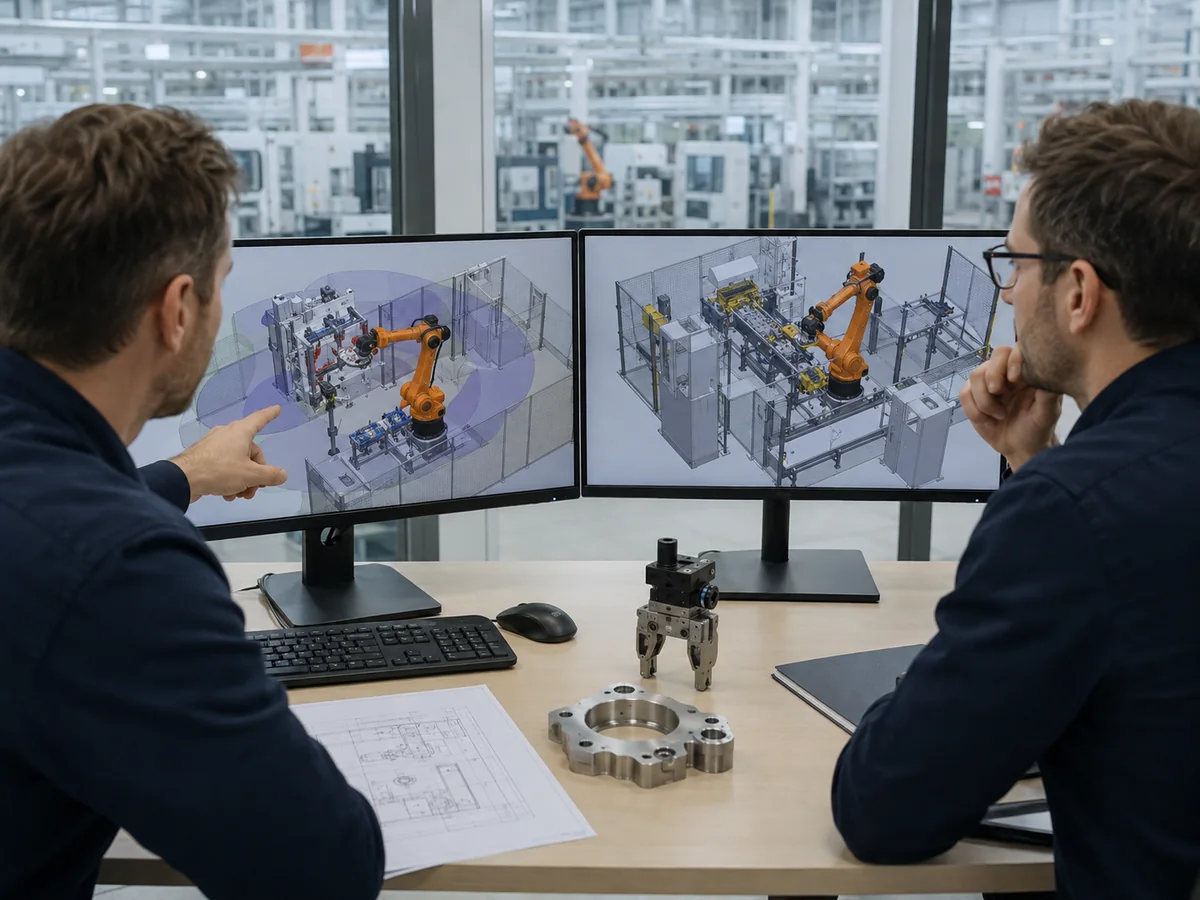
Coordinate movements and approvals without unnecessary waiting time
Robot paths, speeds, approaches, and PLC release signals are considered together. The goal is a smooth, traceable sequence—not individual aggressive motion optimizations.
- Shorten the path and align orientation
- Parallel instead of serial sequences
- Clear release and handshake logic
- Maintain collision space and reserves
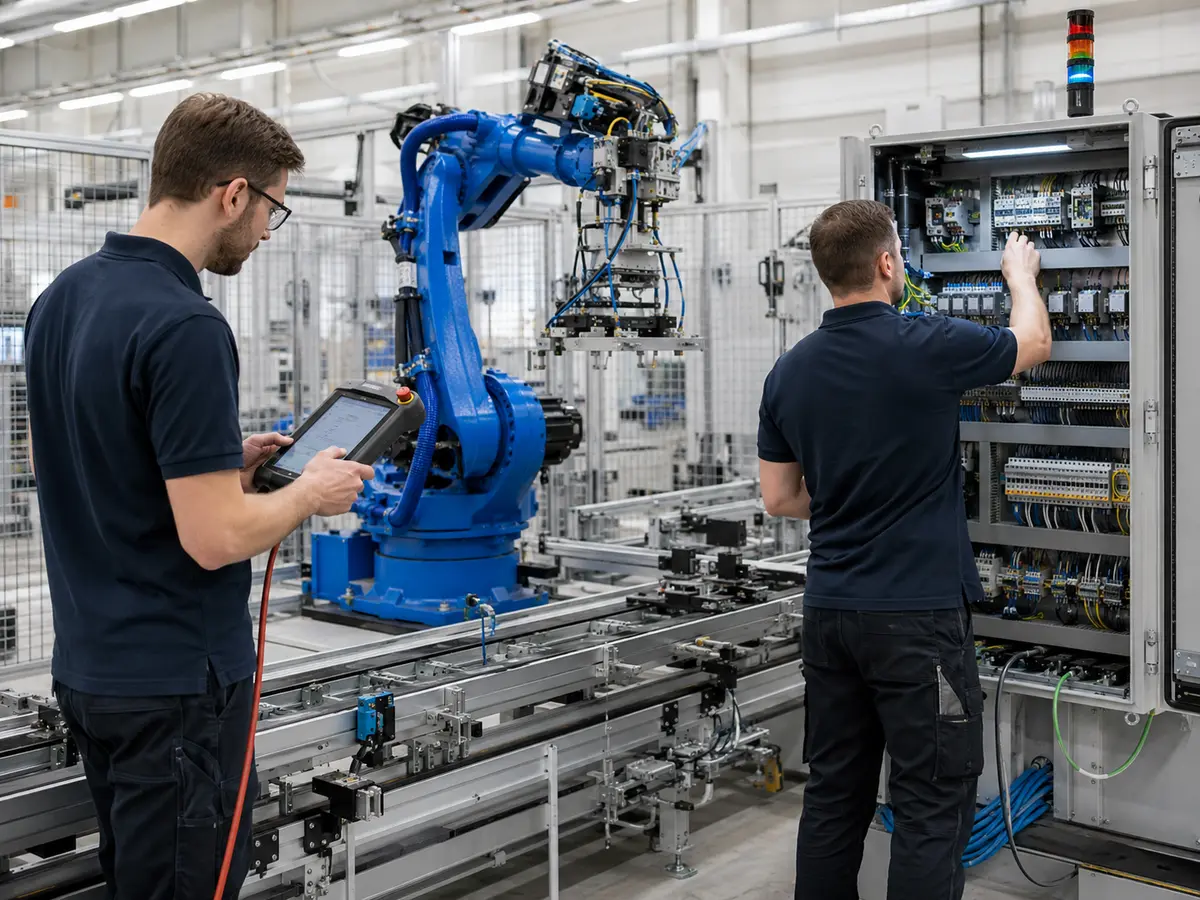
[ RETROFIT OR NEW BUILD ]
Modernize when the technical foundation is viable
Control systems, sensing, safety, or robots can be renewed in a targeted way. If mechanics, spare part availability, or process boundaries are fundamentally unsuitable, a new build is also clearly considered.
- Condition and remaining service life
- Spare part and software availability
- Safety and documentation status
- Effort, risk, and production downtime
[ ANALYSIS 01–04 ]
From the problem to the verified root cause
Before the measure, it is clarified what is really slowing things down or impairing process stability.
01
Define the goal
Describe cycle time, quality, availability, or operation in measurable terms.
02
Capture the current state
Bring together data, observations, and real process flows.
03
Separate causes
Evaluate mechanics, robotics, software, sensorics, and material flow individually.
04
Prioritize leverage points
Make impact, effort, risk, and downtime comparable.
[ IMPLEMENTATION 05–08 ]
From the measure to the proven result
Optimization doesn’t end with a change—it ends with a reliable comparison during operation.
01
Plan the measure
Define the technology, interfaces, testing, and fallback options.
02
Implement in a controlled manner
Carry out conversions and software changes with clear approval.
03
Test the comparison
Measure using the same criteria as in the current state again.
04
Stabilize
Document the result and secure it under production conditions.
[ TARGETED IMPROVEMENT ]
Use existing assets sensibly
Keep the robust mechanics and peripherals if they continue to meet the goal reliably and safely.
[ CLEAR DECISION ]
Retrofit or new build
The recommendation takes technology, risk, spare parts, and production downtime into account.
- Assess impact versus effort
- Document risks openly
- Define measurable acceptance criteria
[ EXISTING PLANT ]
Where does your process lose time or stability today?
Send the fault profile, process description, and any existing data. AROBIS structures the root-cause analysis and the next inspection steps.
[ FAQ ]
Frequently asked questions about process optimization
Answers on analysis, conversion, retrofit, downtime, and success monitoring.
Helpful are cycle-time and disruption data, error messages, videos, shift reports, variant information, and details on manual interventions.
Not always. Part of the analysis can be carried out during production. For measurements or safe functional tests, planned downtime windows may be necessary.
Yes, if the cause is actually in the sequence, path, or release logic. Mechanical and process-related constraints are checked alongside it.
When the mechanical base is capable and targeted upgrades in controls, robotics, sensorics, or safety can achieve the goal economically.
Before and after, the same criteria are compared—for example cycle time, disruption frequency, scrap, interventions, or restart time.
Yes. Planning, conversion, testing, and production support are adjusted to available downtime windows and the process risk.