

Application Examples
Eight industries, different robots, and real production tasks—matched to process, component, and environment.
[ ROBOTIK IN DER PRAXIS ]
The application determines the robot, gripper, and plant concept.
A welding process in the automotive industry has different requirements than food packaging, injection molding part removal, or optical inspection in medical technology.
The following examples therefore intentionally show different robot types, manufacturer colors, tools, and production environments. They are technically plausible without claiming specific customer projects or brand relationships.
[ TECHNISCHE AUSWAHL ]
It’s not the color that matters, but the task.
The manufacturer and robot design type are derived from real process requirements.
01
Process
Handling, joining, machining, inspection, palletizing, or assembly.
02
Component
Geometry, weight, surface, variants, and quality characteristics.
03
Environment
Cycle time, hygiene, dust, temperature, operation, safety, and material flow.
[ AUTOMOTIVE ]
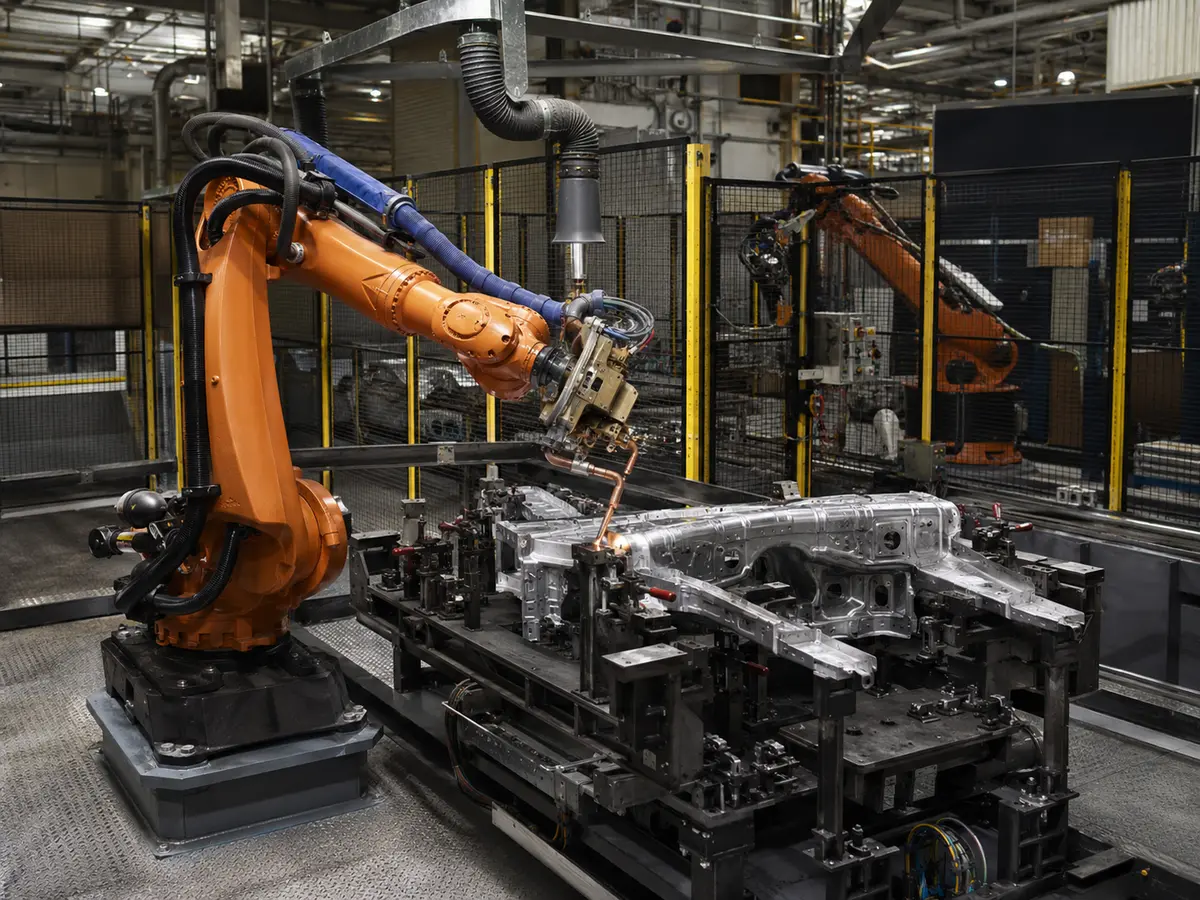
Spot welding with a reproducible weld path and process release
Body parts must be securely clamped in defined fixtures and processed with reproducible welding points. The robot, clamp, media guidance, and component access work closely together here.
- Robust six-axis robotics
- Welding clamp and media package
- Component fixture and releases
- Protective enclosure and process monitoring
[ METALL & CNC ]
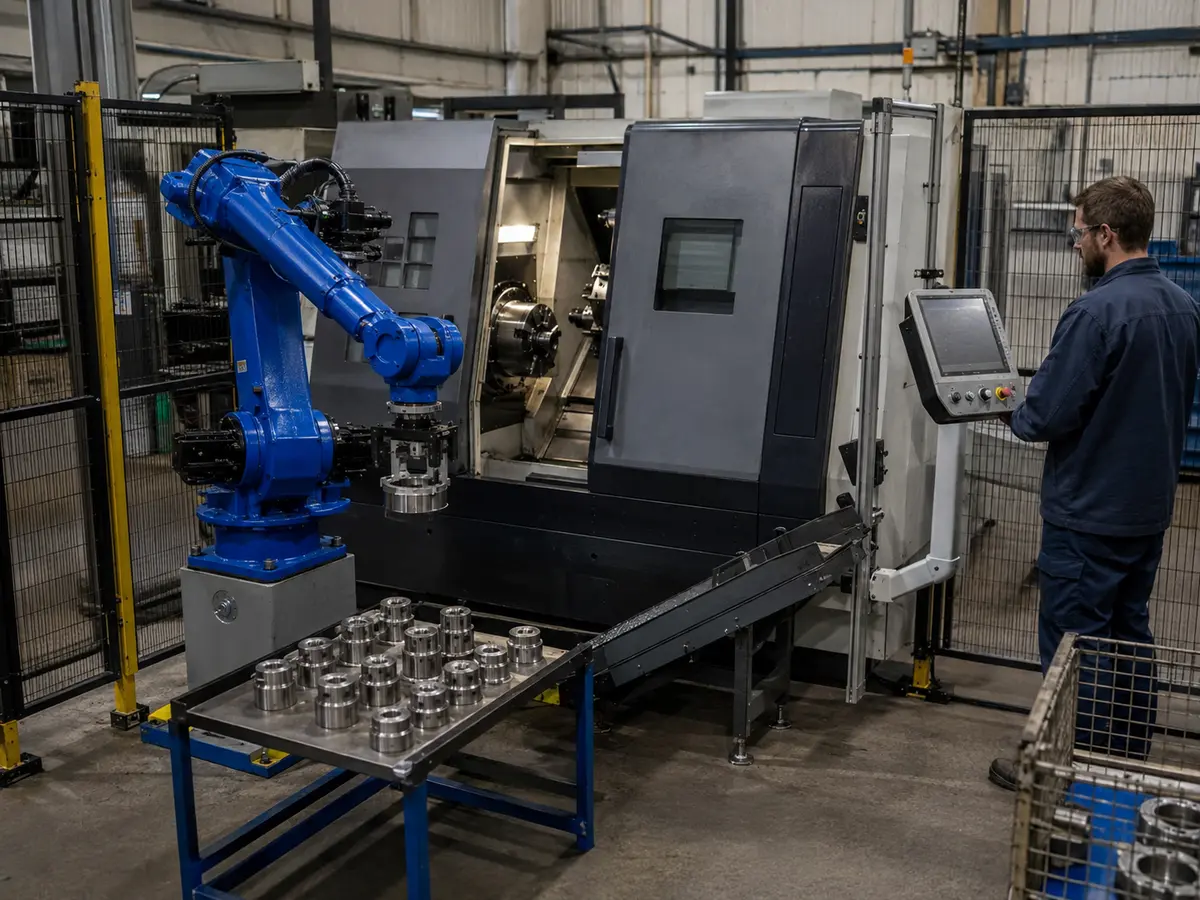
Machine loading with secure part changeover
The robot picks up raw parts, loads the machine tool, and places finished parts in a defined manner. Grippers, the machine door, clamping devices, and the workpiece status must communicate reliably with each other.
- Dual gripper for short changeover times
- Interface to the machine tool
- Part detection and position monitoring
- Unloading, cleaning, or measurement
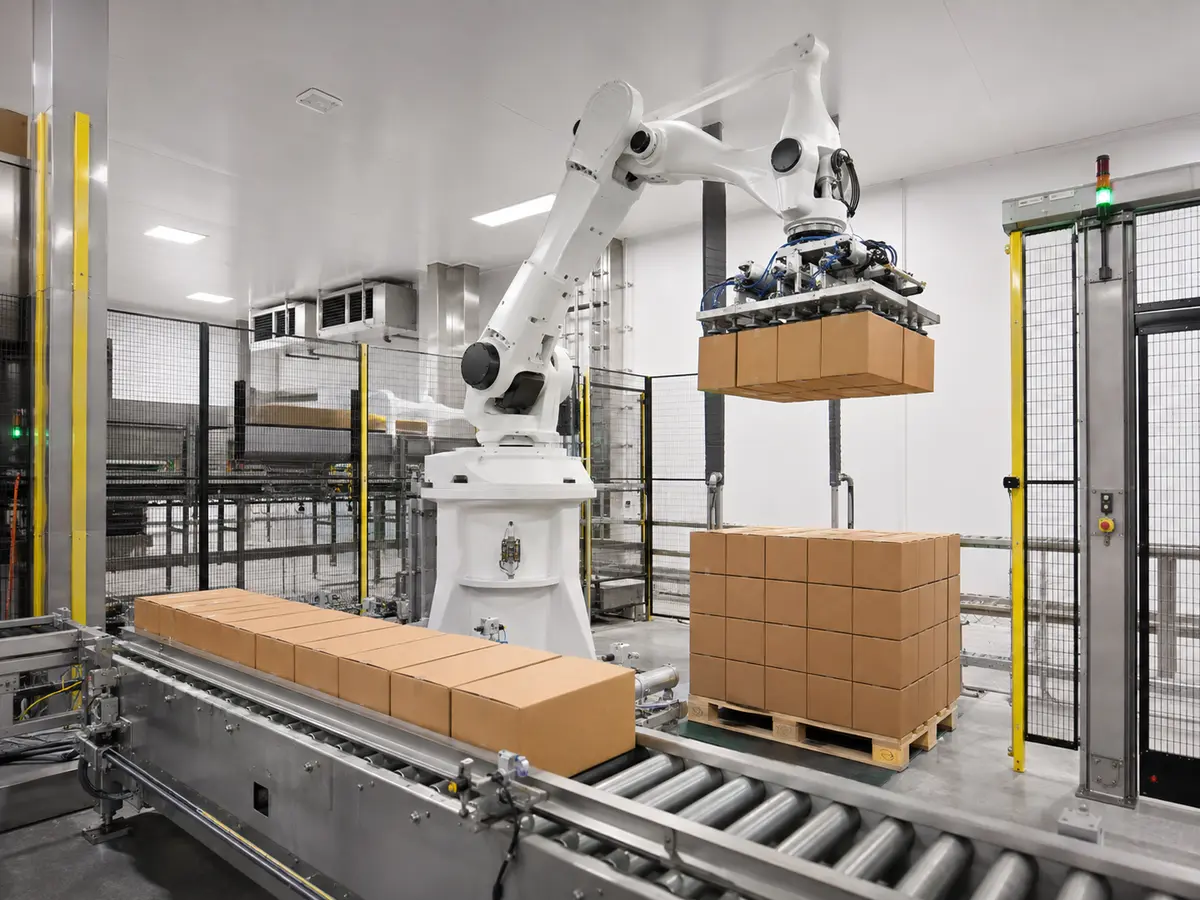
[ LEBENSMITTEL ]
Palletizing in a hygienic production environment
Closed packs are picked up layer by layer and placed stably on a pallet. Cleanability, gentle handling, and a safe material flow determine the layout of the cell.
- Hygienic components
- Vacuum or layer grippers
- Recipe change for formats
- Pallet and intermediate layer handling
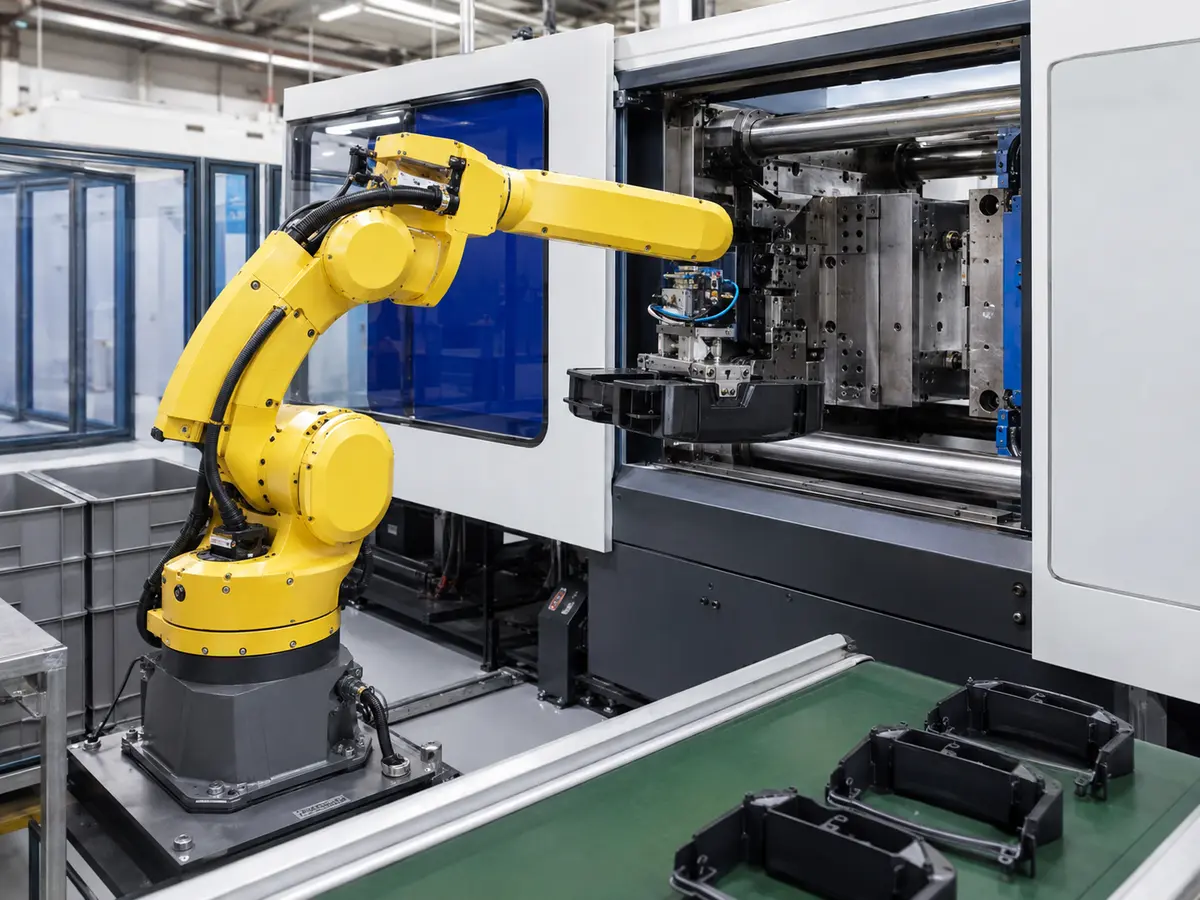
[ KUNSTSTOFF ]
Injection molding part removal with subsequent process steps
Form parts are removed within a defined machine window and can then be checked, separated, marked, or placed. The gripper and the process flow are tailored to the component and the tool.
- Fast and compact robot
- Machine and tool release
- Runner or cavity detection
- Placement, inspection, or further processing
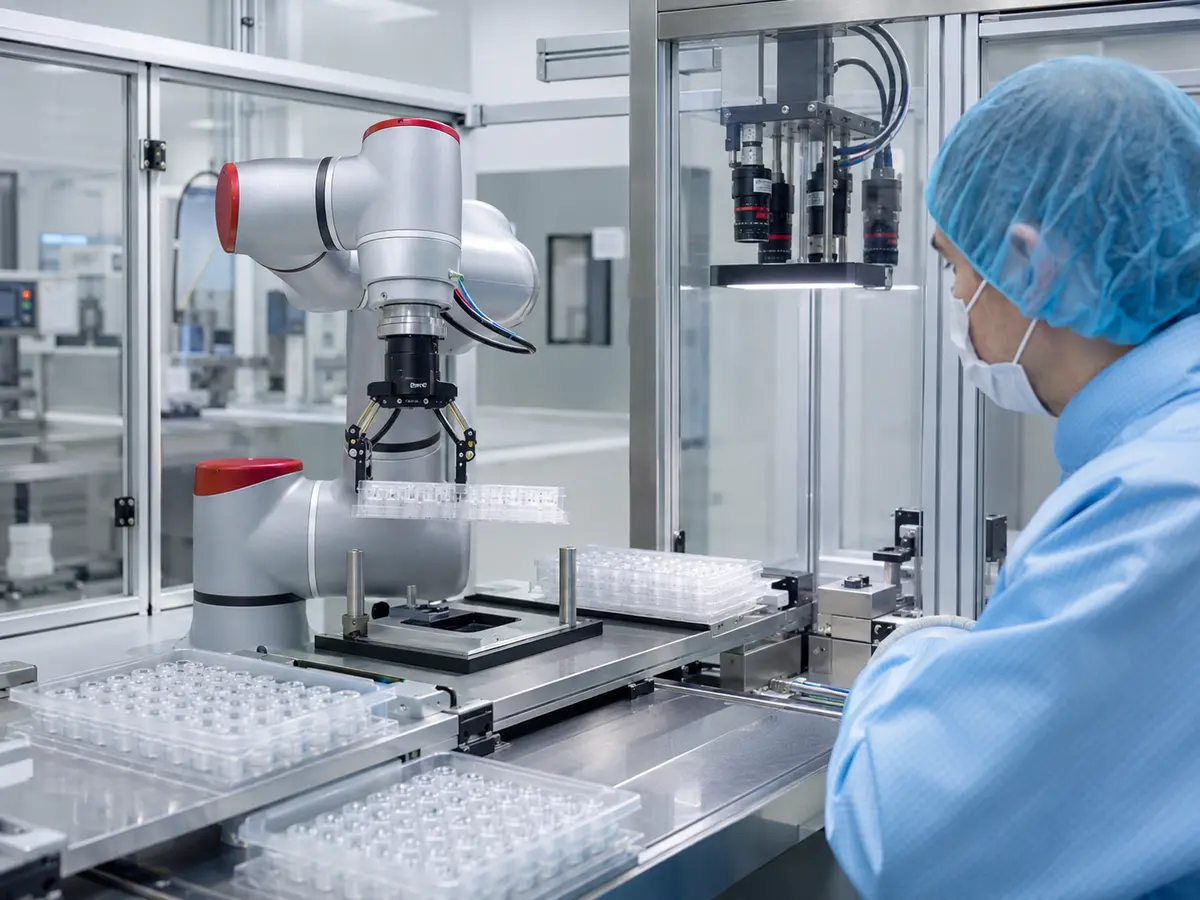
[ PHARMA & MEDIZINTECHNIK ]
Inspect and handle sensitive components
Component trays are fed in, positioned, and visually inspected. Traceable results, gentle handling, and an appropriate material selection are the focus.
- Compact collaborative robotics
- Camera and lighting system
- Tray and nest handling
- Good/bad sorting and traceability
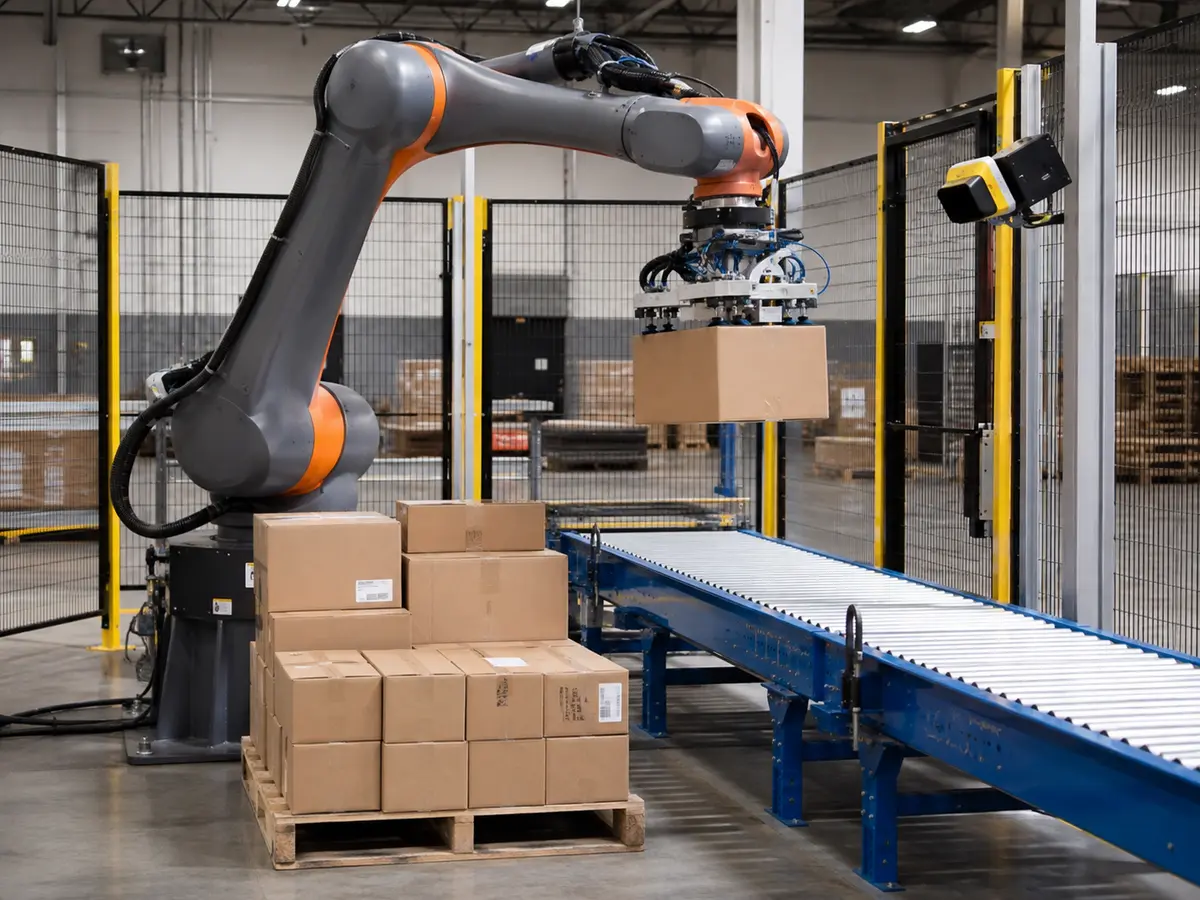
[ LOGISTICS & INTRALOGISTICS ]
Depalletizing varying carton layers
Cartons are detected, gripped, and transferred to a conveyor. Different layer patterns, packaging conditions, and pallet heights require flexible sensing and gripping technology.
- 3D detection of position and height
- Vacuum grippers for variable cartons
- Conveyor technology and material flow
- Handling intermediate layers and residual pallets
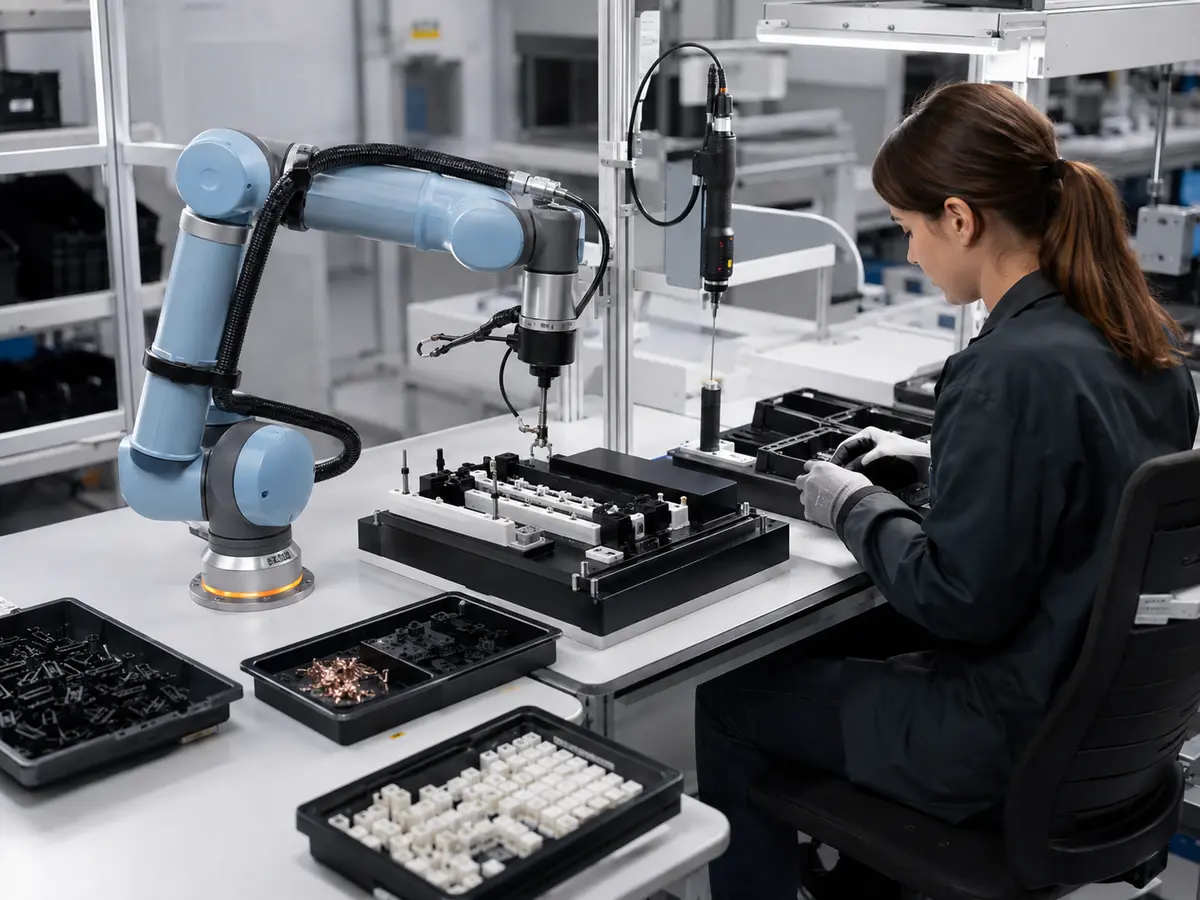
[ ELECTRONICS ]
Collaborative assembly at a manual workstation
A cobot takes over highly repeatable partial tasks, while employees perform flexible assembly and inspection steps. Workstation, tools, and protective concept are considered together.
- Force-limited collaborative robotics
- Small grippers and screwdriving technology
- Workpiece and presence detection
- Ergonomic task sharing
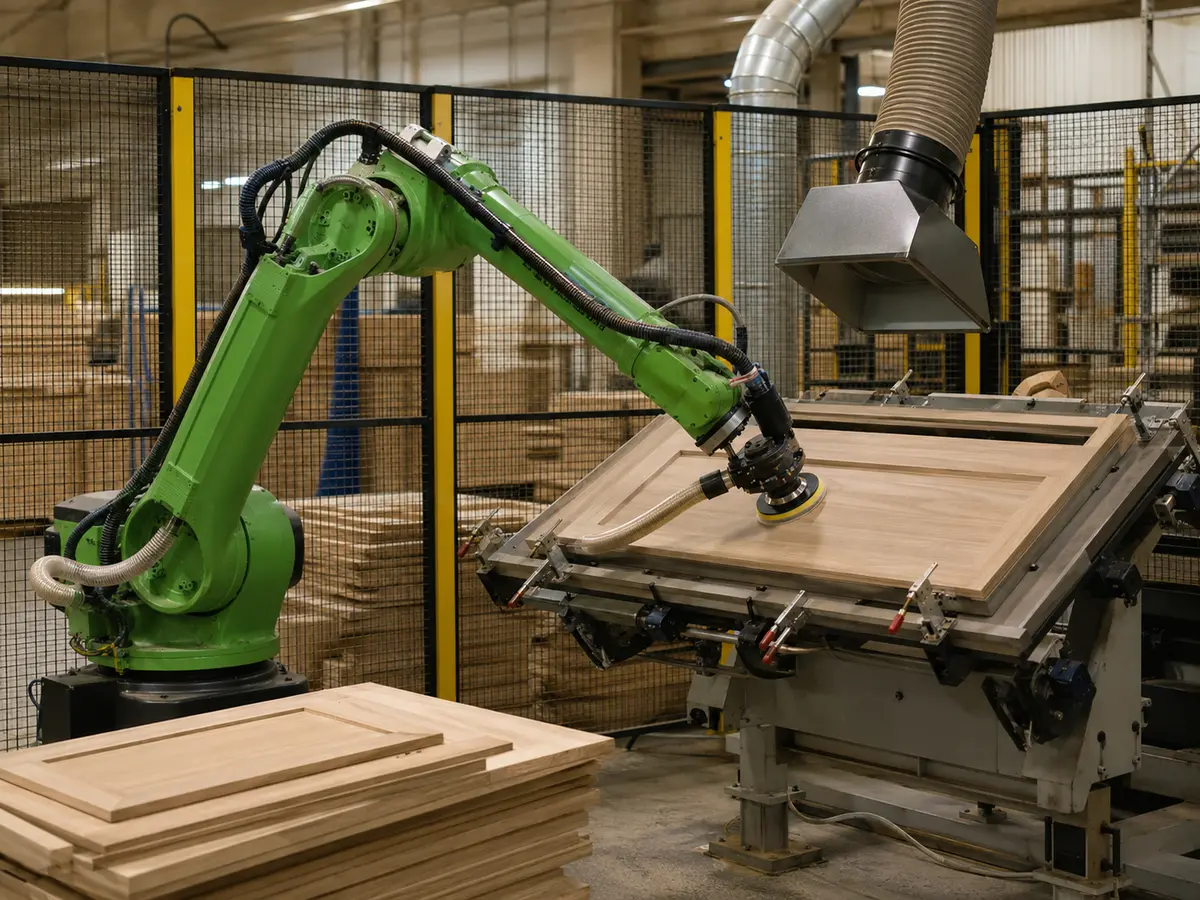
[ WOOD PROCESSING ]
Robot-assisted sanding with controlled contact pressure
Contours and surfaces are processed with uniform pressure. Tool path tracking, dust extraction, trajectory planning, and workpiece clamping directly affect surface quality.
- Force and torque regulation
- Sanding tool with extraction
- Contour and path optimization
- Workpiece fixture and tool change
[ FROM THE TASK TO THE ROBOT CELL ]
Four questions determine the plant concept
A reliable selection starts with the process and ends with integration into day-to-day production.
01
What?
Clearly describe the component, process, quality, and variants.
02
How fast?
Set cycle time, buffers, availability, and changeover times realistically.
03
Under what conditions?
Include hygiene, dust, temperature, operation, and safety.
04
With which interfaces?
Integrate machines, conveyor technology, data, and peripherals cleanly.
[ A GOOD STARTING POINT ]
Component and process data
Real samples, drawings, videos, and cycle-time specifications make the first technical assessment significantly more reliable.
[ NO PREMATURE COMMITMENT ]
Assess manufacturer-independently
The right robot results from the task, reach, payload, environment, and service concept.
- Robot type matched to the kinematics
- Gripper matched to the component
- Cell matched to production
[ YOUR APPLICATION ]
Which robotics fits your task?
Describe the process, component, cycle time, and production environment. AROBIS assigns the robot type, gripping technology, and the next inspection steps.
[ FAQ ]
Frequently Asked Questions about Robotics Applications
Answers on robot selection, gripping technology, industry requirements, and feasibility.
No. Selection and integration are based on the task, reach, payload, accuracy, environment, interfaces, and service requirements.
The colors make it clear that different manufacturers and robot types can be used. They do not indicate a claimed partnership or a specific customer plant.
Yes. Handling, machining, testing, marking, and packaging can be combined in one cell if the cycle time and process reliability allow it.
Based on part geometry, weight, surface, variants, process forces, contamination, and the required changeover strategy.
No. The safety concept is determined by the risk assessment of the entire application, including the tool, workpiece, speed, and environment.
Depending on the task, gripping, machining, or recognition trials can be part of the feasibility assessment.